
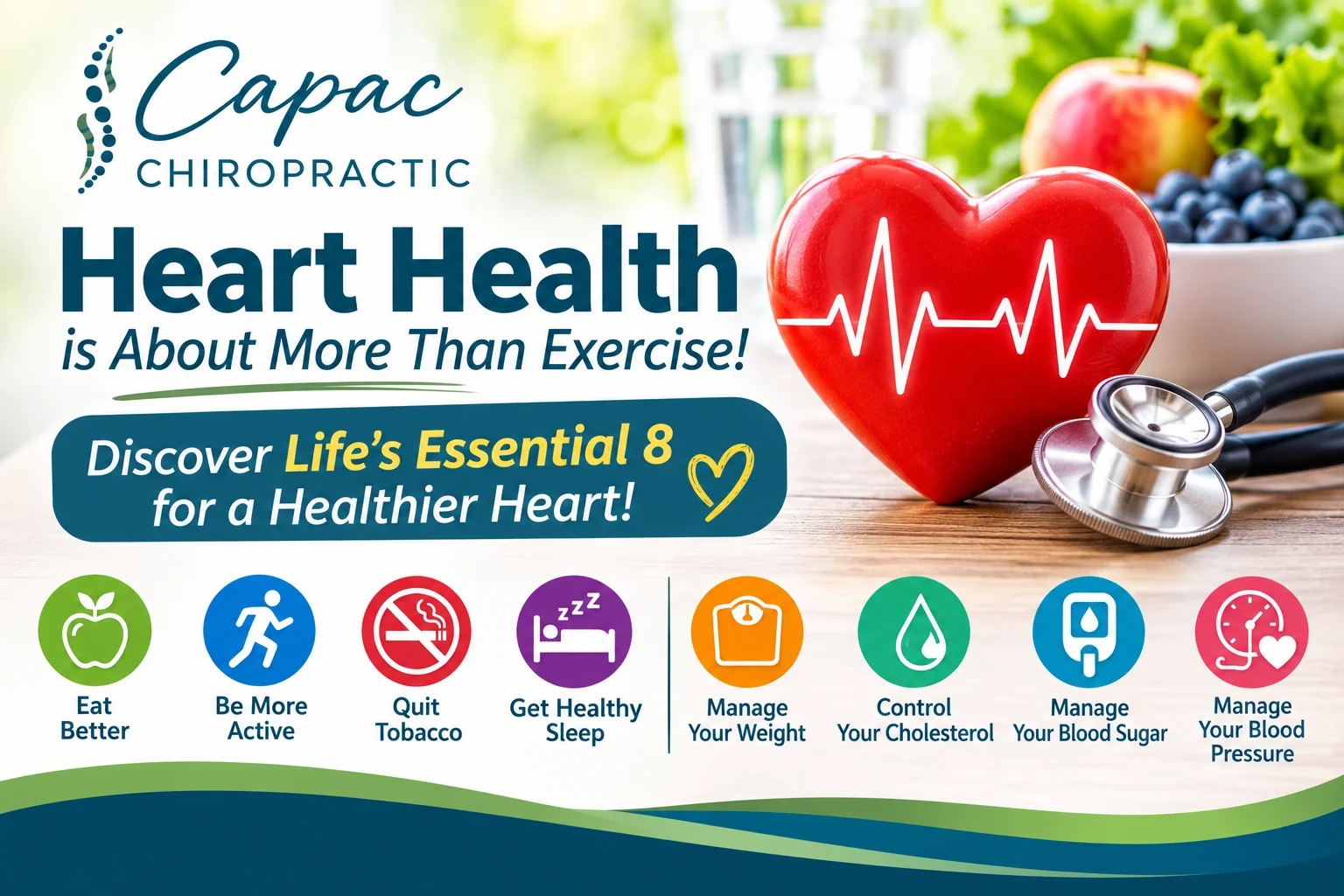
When most people think about improving their heart health, exercise is often the first thing that comes to mind. While staying physically active is important, cardiovascular health involves much more than how often you work out.
Your heart is affected by many parts of your everyday lifestyle, including nutrition, sleep, weight, blood pressure, cholesterol, and blood sugar. Paying attention to these areas can help support your cardiovascular system and reduce your risk of heart disease.
At Capac Chiropractic, we believe that understanding your overall health is an important part of building a healthier, more active lifestyle. One helpful resource for learning about heart health is the American Heart Association's Life's Essential 8.
What Is Life's Essential 8?
The American Heart Association developed Life's Essential 8 as a guide to eight key factors that influence cardiovascular health. These factors include four health behaviors and four health measurements.
Together, they offer a practical way to evaluate your habits and identify areas where small changes may make a meaningful difference.
Let's take a closer look.
The Four Health Behaviors
1. Eat Better
A heart-healthy eating pattern emphasizes nutritious foods that provide the vitamins, minerals, fiber, and nutrients your body needs.
Some helpful habits include:
- Eating plenty of fruits and vegetables
- Choosing whole grains more often
- Including lean proteins and healthy fats
- Limiting highly processed foods
- Reducing added sugars and excess sodium
You don't have to change everything overnight. Making consistent, realistic improvements to your eating habits is a great place to begin.
2. Be More Active
Regular physical activity helps support heart health, circulation, blood pressure, and overall physical fitness.
Adults should generally aim for at least 150 minutes of moderate-intensity aerobic activity or 75 minutes of vigorous activity each week, along with muscle-strengthening activities.
Walking, swimming, cycling, gardening, and other activities you enjoy can all help you become more active.
The most important thing is finding movement that fits your abilities and that you can maintain consistently.
3. Quit Tobacco
Smoking and other forms of tobacco use can damage blood vessels and increase the risk of cardiovascular disease.
Quitting tobacco is one of the most important steps you can take to improve your long-term health. Avoiding secondhand smoke is also beneficial.
If quitting feels difficult, talk with a healthcare professional about support programs and resources that can help.
4. Get Healthy Sleep
Sleep is essential for more than simply feeling rested. Consistently getting enough quality sleep supports many of the body's systems, including those involved in cardiovascular health.
Most adults should aim for seven to nine hours of sleep each night.
Helpful sleep habits include maintaining a consistent bedtime, limiting screen time before bed, and creating a comfortable sleeping environment.
If you regularly struggle with sleep or feel excessively tired during the day, consider discussing it with your healthcare provider.
The Four Health Factors
5. Manage Your Weight
Maintaining a healthy weight can help reduce strain on the cardiovascular system and support healthier blood pressure, blood sugar, and cholesterol levels.
Weight is influenced by many factors, including genetics, activity, nutrition, sleep, medications, and overall health.
Rather than focusing only on the number on the scale, consider building sustainable habits that support your overall well-being.
6. Control Your Cholesterol
Cholesterol is a type of fat found in your blood. Your body needs some cholesterol to function, but unhealthy cholesterol levels can contribute to plaque buildup in the arteries.
A healthcare professional can help evaluate your cholesterol levels and determine whether lifestyle changes or medication may be appropriate.
Eating a balanced diet, staying active, and following your provider's recommendations can all play a role in managing cholesterol.
7. Manage Your Blood Sugar
Blood sugar, also known as blood glucose, is your body's main source of energy.
However, consistently elevated blood sugar can damage blood vessels over time and increase the risk of cardiovascular complications.
Eating balanced meals, staying physically active, maintaining recommended health screenings, and following your healthcare provider's guidance can help support healthy blood sugar levels.
8. Manage Your Blood Pressure
Blood pressure measures the force of blood pushing against the walls of your arteries.
When blood pressure remains too high, it can place additional strain on your heart and blood vessels.
Regular monitoring is important because high blood pressure often has no noticeable symptoms.
Healthy eating, physical activity, limiting excess sodium, managing stress, and taking prescribed medication when needed can all help support healthy blood pressure.
Small Changes Can Make a Big Difference
Improving your heart health doesn't mean you need to completely change your lifestyle all at once.
Start with one or two realistic goals. You might take a daily walk, add more vegetables to your meals, establish a consistent bedtime, or schedule a blood pressure check.
Over time, these small steps can become lasting habits.
It's also important to remember that heart health is personal. Your age, family history, medical conditions, and other factors can influence your individual needs. Work with your healthcare provider to determine which steps are most appropriate for you.
How Does Chiropractic Care Fit Into Overall Wellness?
Chiropractic care primarily focuses on the relationship between the spine, nervous system, joints, and musculoskeletal function.
While chiropractic adjustments are not a treatment for heart disease, blood pressure, high cholesterol, or diabetes, chiropractic care may be one part of a broader approach to musculoskeletal health and physical well-being.
At Capac Chiropractic, we encourage patients to stay active, pay attention to their health, and work with the appropriate healthcare professionals to support their overall wellness.
If discomfort or limited mobility makes everyday movement more challenging, a chiropractic evaluation may help determine whether musculoskeletal care is appropriate for your situation.
Looking for a Chiropractor in Capac, Michigan?
Taking care of your health involves more than addressing discomfort when it appears. Building healthy habits, staying active, and keeping up with routine health screenings are all important parts of long-term wellness.
If you're looking for a chiropractor in Capac, Michigan, the team at Capac Chiropractic is here to help you work toward better movement and musculoskeletal health.
Remember: A healthier heart starts with everyday choices. Take a look at the American Heart Association's Life's Essential 8 and consider which healthy habit you can start working on today!
Learn more about Life's Essential 8 through the American Heart Association.